SAFO BY HEART: UPCYCLING AND THE POWER OF GOTS CERTIFICATION

SaFo by Heart is a recently launched brand from a textile manufacturing company in Kochi, Japan. The company incorporates practices including the reuse of manufacturing scraps and offers GOTS-certified organic textile products.

SaFo by Heart uses scraps generated during bedding manufacturing to make cloth packaging and other products. The company has also introduced measures to monitor waste and emissions associated with its operations.

GOTS provides requirements for the processing and manufacturing of textiles made with certified organic fibres. It covers stages after raw fibre production, including first processing, manufacturing and trading. Compliance with applicable GOTS requirements is independently assessed and certified by accredited third-party Certification Bodies.

We spoke with SaFo by Heart’s leadership about the company’s development, its experience with GOTS certification and the practices it has introduced alongside certification.

Global Standard: Can you tell us a bit about SaFo by Heart and the story behind its creation?

Hiroaki Yamaoka:

SaFo by Heart grew out of our experience manufacturing bedding and textiles. We are a factory brand of a manufacturing company located in Kochi, founded in 1988.

One area we have focused on is making further use of materials generated during manufacturing. For example, we use scraps from the bedding manufacturing process to create cloth packaging and other products. Instead of discarding these materials, we look for ways to use them in new applications.

Global Standard: Why did you choose to pursue GOTS certification, and how does it align with SaFo by Heart’s values?

Hiroaki Yamaoka:

We wanted a defined framework that addresses requirements relevant to textile processing and manufacturing.

GOTS provides requirements covering areas including chemical inputs, environmental management and social criteria within its certification scope. For us, working within these requirements provides a structured framework for reviewing our manufacturing practices.

GOTS applies to textile processing stages after raw fibre production. Compliance with applicable requirements is independently assessed and certified by accredited third-party Certification Bodies.

Global Standard: How has GOTS certification impacted SaFo by Heart’s practices?

Hiroaki Yamaoka:

Maintaining GOTS certification involves regular assessment against the requirements of the Standard. This has provided us with a framework for reviewing different aspects of our operations.

Separately, we work with a university to measure CO₂ emissions associated with our production. We also calculate waste and emissions data and display this information at our factory and offices so that it is visible to our team. We use this information to monitor our performance and identify areas where we can make changes.

GOTS certification has also become an important part of how we communicate about our organic textile products in Japan and internationally.

Global Standard: What are some of the tangible benefits SaFo has experienced since obtaining GOTS certification?

Hiroaki Yamaoka:

For our clients and consumers, certification provides independently assessed information that specified products comply with applicable GOTS requirements.

Internally, the Standard provides a defined set of requirements against which relevant aspects of our manufacturing operations are assessed.

Alongside certification, we continue to look for ways to make use of manufacturing scraps. One example is our cloth packaging, which uses material that would otherwise have been discarded during our bedding manufacturing process. Finding additional uses for these materials has become an important part of how we approach product and packaging development.

Global Standard: Looking to the future, what are SaFo by Heart’s goals, and how does GOTS play a role in achieving them?

Hiroaki Yamaoka:

We plan to continue developing our product range while maintaining GOTS certification for applicable products.

GOTS provides a consistent programme for textile processing and manufacturing after raw fibre production. As we develop new products, its requirements will continue to provide a framework against which relevant processing and manufacturing activities can be independently assessed.

We also hope that sharing our experience will help other textile businesses understand what GOTS certification involves and how its requirements are applied in practice.

Conclusion

SaFo by Heart combines textile manufacturing with practices including the reuse of production scraps and the monitoring of operational waste and emissions.

For its GOTS-certified products, the applicable textile processing and manufacturing stages are assessed against the requirements of GOTS. Compliance with those requirements is independently assessed and certified by accredited third-party Certification Bodies.

SaFo by Heart’s experience provides a practical example of how a textile manufacturer can integrate GOTS requirements into its operations while developing its own approaches to material use, measurement and product development.

What Is the GOTS Due Diligence Handbook for Auditors? And what does it mean for consumers?

When you pick up an organic cotton shirt or a GOTS-certified textile product, you may not think about the requirements and assessment processes behind the GOTS label.

GOTS sets requirements for the processing and manufacturing of textiles made with certified organic fibres. It covers stages after raw fibre production, including first processing, manufacturing and trading, and includes environmental, chemical and social criteria within its scope. Compliance with applicable GOTS requirements is independently assessed and certified by accredited third-party Certification Bodies.
Audits are an important part of this certification process. Qualified auditors working with accredited third-party Certification Bodies assess certified operations against applicable GOTS requirements. Depending on the scope of the certified operation, this includes requirements concerning areas such as chemical inputs, environmental management, waste management and social criteria.
These assessments provide a structured process for verifying whether certified operations comply with the applicable requirements of GOTS.
We are now taking another step in supporting this process with the release of a key document: the GOTS Due Diligence Handbook for Auditors.

What Is the GOTS Due Diligence Handbook for Auditors?
The GOTS Due Diligence Handbook for Auditors provides guidance to auditors assessing due-diligence requirements at GOTS-certified operations.
It does not replace the existing requirements of the Standard. Instead, it provides auditors with additional tools and step-by-step guidance for assessing relevant due-diligence processes within the scope of GOTS certification.
The regulatory landscape for corporate due diligence is also developing, with legislation in a number of jurisdictions addressing businesses’ responsibilities in relation to human rights and environmental matters in their operations and supply chains.
The Handbook is intended to support auditors in assessing the applicable GOTS due-diligence requirements consistently and practically.

A Collaborative Effort

In creating the Handbook, Global Standard worked with UpRights, a non-profit organisation from the Netherlands that aims to ensure respect for human rights and international law, empower victims and hold perpetrators accountable.
Auditors, human rights experts and industry representatives from different regions were also involved in the process. Their input helped inform practical guidance addressing situations that auditors and certified operations may encounter.

How Does It Help You as a Consumer?

The Handbook supports the auditing process behind GOTS certification.
When you see a GOTS label on a certified product, it indicates that the applicable textile processing and manufacturing operations have been assessed against GOTS requirements within the scope of their certification.
Those requirements cover specified environmental, chemical and social criteria. Compliance with the applicable requirements is independently assessed and certified by accredited third-party Certification Bodies.
For consumers, the GOTS label therefore provides information about a product’s certification and the requirements against which the relevant certified operations have been assessed. The new Due Diligence Handbook for Auditors provides additional guidance for auditors carrying out these assessments, supporting the consistent application of GOTS due-diligence requirements across certified operations.

Check out the press releasere here, or directly access the GOTS Due Diligence Handbook for Auditors.

Exploring Lyocell with LangerChen

Did you know that GOTS allows certain additional fibres to be used alongside certified organic fibres in textile products, subject to applicable GOTS requirements?

GOTS has two label grades. The “organic” label grade requires at least 95% certified organic fibres, while the “made with organic” label grade requires at least 70% certified organic fibres.

It is important to distinguish the organic certification of raw fibres from GOTS certification of textile processing and manufacturing. GOTS does not certify the cultivation of organic fibres. Instead, GOTS applies to subsequent stages of the textile production process, after raw fibre production, including first processing, manufacturing and trading. Depending on the applicable GOTS composition requirements, additional fibres can make up part of a GOTS-certified textile product. One fibre that can be used as an additional fibre is lyocell.

But do you know where lyocell comes from, how it is produced and what gives textiles made with it their flowing and soft qualities?
Philipp Langer, one of the co-founders of the German coat and jacket brand LangerChen, sat down with us to talk about textiles made with lyocell and how the fibre is used in the brand’s products:

ABOUT LYOCELL WITH LANGERCHEN

Tiny footprints, big impact: 6 tips for raising kids with certified textiles in mind

At Frugi, a UK-based baby, children’s and mum’s clothing brand, we’ve got a fair few parents on the team who know the juggle all too well. From recycling and passing on clothes to growing food at home, here are some of the everyday activities they enjoy with their families:

  • Rowan, Graphic Designer: “At home, we try to make activities like recycling and composting a bit of fun for the kids. We get them involved in little tasks, and they actually love it! We turn it into a game to see who can sort everything into the right bins the fastest.”
  • Jeni, Product & Brand Director: “We’re all about hand-me-downs in our family. Some of our Frugi clothes have easily gone through my two (now teenage) nephews, my own two children, and have now been passed to friends with smaller children too. Passing clothes on means they can be used for longer, brings some variety to the kids’ wardrobes, and can save money at the same time.”
  • Meg, Marketing Manager: “Getting my little one involved in what we do has really helped them be part of the choices we make. We’ve started growing some easy veggies in the garden, and it’s been so much fun teaching them how to take care of the plants. The best part is using what we’ve grown in our cooking!”

Inspired by our team, here are some simple activities you can try with your kids:

  1. Start a Recycling Challenge: Make recycling fun by creating a challenge for your kids. See who can sort recyclables the fastest, or come up with creative ways to reuse items. Use this handy poster as a reminder of ways you can be a hero every day by reducing, reusing and recycling. Download here.
  2. Create a Capsule Wardrobe: Invest in a few high-quality, versatile clothing pieces instead of a huge quantity of items. Go for designs that are easy to mix and match to create multiple outfits, which is even easier with Frugi’s reversible clothing. This approach not only simplifies daily routines but also helps instil a sense of mindfulness for the planet in your children from an early age.
  3. Gardening Together: Plant a small garden or even a few pots of herbs on the windowsill. It’s a great way for kids to connect with nature and learn about where their food comes from. Print out our garden markers download to label your fruit, veggies and herbs.
  4. Go on a Nature Adventure: Spend a day exploring your local park, forest or beach. Pack a picnic, take a nature walk and encourage your kids to observe the beauty around them. We have a handy eye spy bingo you can take with you.
  5. Look after Our Wild Friends: Teach your little ones the importance of being kind to the animals and creatures we live amongst. Help to create safe spaces for the little creatures that roam our planet by building a bug hotel in your garden or outdoor space and practice identifying little creatures.
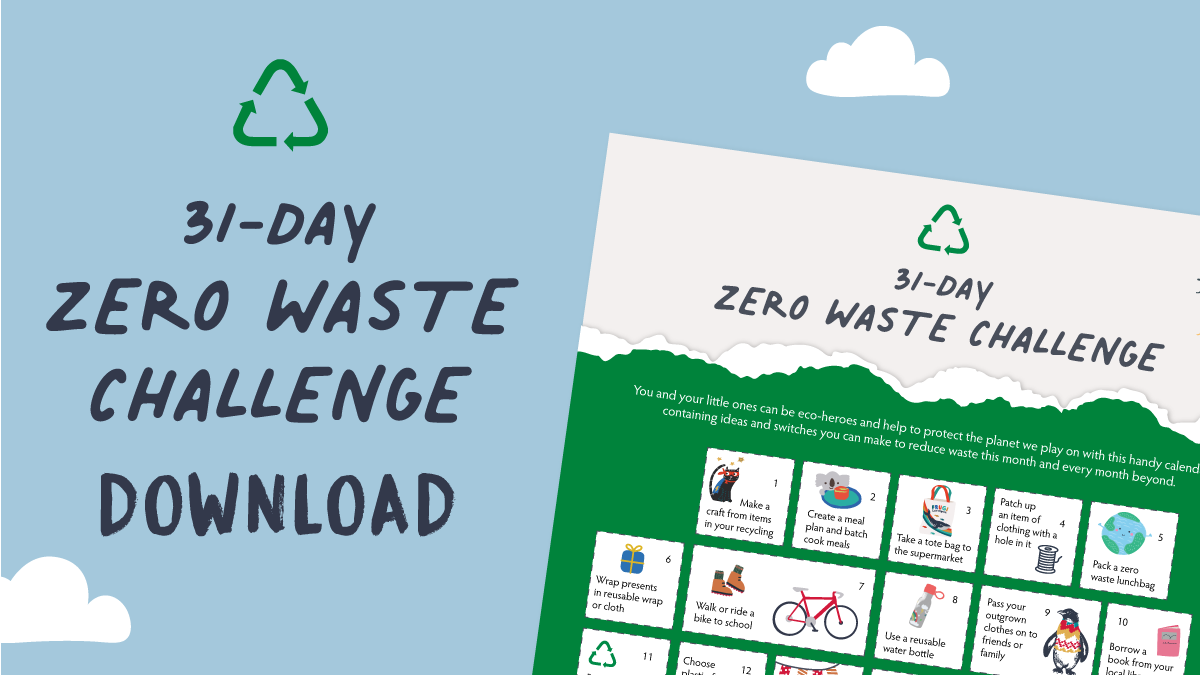
  6. Say Yes! to Zero Waste: Be a hero every day by encouraging children to reduce waste. We’ve even got a handy 31-day zero waste challenge that’s filled with simple ideas and switches you can make as a family to help reduce the impact of waste on the planet.

At the end of the day, there are lots of everyday choices families can make together. From passing clothes on so they can be used for longer to recycling, growing vegetables and spending time in nature, small activities can also be a great way to get children involved.
When choosing textiles, certification can provide additional information about how a product has been made. For GOTS-certified products, textile processing and manufacturing operations are independently assessed against specified GOTS requirements.

So, let’s keep involving our children in the choices we make and the things we do together. Because really, kids don’t always need more clothes. Sometimes what they need most is more time outdoors, more joy, more fun and a bright, bright future ahead of them.

Meg Brown, Marketing Manager at Frugi, leads campaigns and partnerships for the brand.


How AI and Satellite Data Are Reshaping Organic Cotton Sourcing

When most people think about cotton fields, they probably don’t picture satellites and artificial intelligence. But a project co-financed by Global Standard and the European Space Agency’s Business Applications and Space Solutions programme is exploring how satellite imagery and AI can provide information about cotton cultivation.

Working with AI company Marple, the Satellite Cotton Monitoring Project has used satellite imagery and AI technology to distinguish cotton fields from other agricultural fields and to assess characteristics associated with different cotton cultivation methods.
Monitoring fields in India, the project reported a 97% accuracy rate in identifying cotton fields and an accuracy rate of over 80% in its assessment of organic cultivation status. These figures relate to the project’s classification methodology and do not themselves constitute organic certification of the cotton.

The project uses Marple’s Cotton Cultivation Remote Assessment (CoCuRA) software to analyse satellite data and identify relevant cultivation patterns.
The technology could help identify cotton-growing areas for further assessment and provide additional information about raw-material production. Where applicable, this information may also help identify producers who could pursue organic certification through the relevant certification processes.
The data generated by the project also contributes to Global Standard’s Global Fibre Registry, which brings together information about raw-material production before materials enter the GOTS textile-processing value chain. This data can support checks and help identify potential discrepancies or fraud risks.

Watch Claudia Kersten and Jeffrey Thimm from Global Standard and Daniel Lanz from Marple explain more about the project and its impact:

Read more here and listen to a podcast between Claudia and Ecotextile News here.


100 years of knowledge: One brand’s generational views on making textiles

For nearly 100 years, craftsmanship and attention to detail have been part of Sankei Meriyasu’s approach to garment making. With its long history in the textile industry, Sankei Meriyasu combines traditional techniques with seamless knitting technology to produce luxurious and comfortable knitwear.
The company also produces GOTS-certified products. GOTS applies to textile processing and manufacturing stages after raw fibre production and sets requirements covering specified environmental, chemical and social criteria within its scope. Compliance with applicable GOTS requirements is independently assessed and certified by accredited third-party Certification Bodies.

GOTS recently spoke to Sankei Meriyasu President and Representative Director Tokuo Miki and his children, Yasuko Miki and Ken Miki. Bringing perspectives from different generations in the fashion and textile industry, they shared their views on current trends, sustainability, their brand, the future and more.

GOTS: Can you talk about the wide range and trends of fashion in Japan?

Yasuko/Ken: Japanese fashion is globally recognised for its diversity, ranging from genres like Comme des Garçons, Yohji Yamamoto and NIGO’s Ura-Hara style to Uniqlo’s basic fast fashion. However, there are many other options within Japan that are less known internationally. These include designer brands and domestic SPA (specialty store retailer of private label apparel) brands that are affordable and trend-conscious. Among these, factory-origin brands also form a distinctive genre within Japan. Each generation enjoys self-editing and personalising their style, even within the same brand, reflecting the diversity of Japanese fashion.

Tokuo: There are products at many different price points, and a large proportion of clothing sold in Japan is produced overseas. I see the current situation, where a large amount of clothing is made for short-term consumption and fleeting styles, as reminiscent of the monoculture era in different countries where they produced sugar and other luxury goods.

GOTS: How do you see the younger generation today thinking about environmental and social issues in their everyday lives?

Yasuko/Ken: The younger generation is vocal about their values and preferences, using new platforms to express their thoughts and emotions. They don’t just act but also share their ideas and look for others who share their views. From our perspective, questions about environmental and social issues are becoming a more visible part of these conversations.

Tokuo: Many people believe that the current situation will continue indefinitely, so I think few young people feel the difficulty of sustaining it. However, in Japan, practices within families, such as not leaving food unfinished and using things completely, have been ingrained from a young age. I think these are valuable habits to carry forward.

GOTS: What are some tips for anyone thinking more carefully about the textiles they choose and use?

Yasuko/Ken: There is no need to force it into your life. Instead, choose items that you genuinely like and want to use for a long time. Being interested in the stories and backgrounds of the things you buy can also help you learn more about how they were made. It’s our responsibility to continue creating and sharing those stories.

Tokuo: Continue using things you like. Avoid being swayed by momentary pleasures.

GOTS: You have another brand that focuses on high-quality basics. What makes Eiji “the perfect” T-shirt for you?

Yasuko/Ken: For us, the Eiji T-shirt is special not only because of its production background and the soft, comfortable fabric created by skilled artisans, but also because it can be customised to the individual. Unlike conventional T-shirts that are pre-made to standard sizes, the Eiji T-shirt can be tailored to the wearer. The ability to repair the T-shirt and continue wearing it over time is also an integral part of the Eiji philosophy.

Tokuo: I believe it’s because it’s a T-shirt that the craftspeople who make the clothes most want people to wear and trust to be good.

GOTS: Sankei Meriyasu has a nearly 100-year history. What changes have you seen, and what has inspired you to maintain the company’s approach to quality over the years?

Tokuo: When I inherited Sankei Meriyasu as the third generation, the work of making clothes domestically in Japan was gradually decreasing, with production in China increasing, making it a declining industry domestically. In such circumstances, together with skilled craftspeople and cooperating factories, we have struggled to change how and what we make to adapt to the times and somehow keep the factory running.

However, in order to maintain the factory, I have always felt that “making money doesn’t justify everything” and “I don’t want to make clothes that make people unhappy.” As a result of continuing to make clothes with these feelings despite the difficulties, 100 years have passed. That is my honest impression.

GOTS: Ken and Yasuko, what was it like growing up around this company? What did you see and learn from being in this environment?

Ken: Growing up, I remember our factory as a lively and welcoming place. I enjoyed seeing people working together, including collaborations with workers from other factories. Growing up in this environment allowed me to see the care that goes into making products and gave me a strong sense of community.

Yasuko: Honestly, when I was little, I didn’t fully appreciate how valuable the workshops and factories we work with were. The employees and workers were always very friendly and would compliment me, so it was fun to hang out at the company. Now, I feel incredibly fortunate and grateful to have them as part of our team. Their dedication is central to the quality of the garments we make.

My grandmother, who worked at our company until she was 80, inspired me immensely with her hard work and impeccable style. She’s the most stylish grandmother I’ve ever known, and she definitely motivated me to work hard and dress well.

GOTS: Yasuko, you now live in the U.S., giving you a different perspective on the fashion world. From your experience, how do conversations about environmental issues and fashion differ between Japan and the U.S., particularly New York?

Yasuko: From my personal experience, these topics seem to be more visible in everyday conversations and shopping in New York. For example, I see organic cotton products and second-hand shopping frequently. Thrift shopping is particularly visible here.

In Japan, I think there is an opportunity for consumers to learn more about how textiles and garments are produced and about their environmental impacts. I also see more of these conversations taking place among younger people through social media.

GOTS: Do you see the relationship between nature, cities and textile traditions differently in the two places?

Yasuko: In Japan, there are many artisanal textile and garment producers with specialist skills and long-established production techniques. Some of these skills are at risk of disappearing because producers cannot find successors. I think it’s important for people in Japan and elsewhere to understand these skills and the work behind them.

In New York, I see a strong emphasis on innovation and new approaches to urban living, from rooftop gardens to developments in fashion and materials. I think there are interesting ideas and experiences that people in Japan and New York can learn from each other.

GOTS: Where do you see the company going in the future?

Ken: We create unique clothes that only we can make, and we now have the means to share this with the world. We’ve realised that if we create what we truly want to make and share it globally, there will be people who appreciate and need it. This makes us very optimistic about the future. We are focused on preserving and passing down the techniques of our predecessors to the next generation with a strong sense of purpose.

What’s in a stitch? Go #BehindTheSeams of organic fashion with GOTS

You pull a shirt over your head, zip up a pair of jeans and maybe grab a tote bag on the way out the door. But have you ever wondered what it takes to stitch the fabric, weave the linen, dye the threads and prepare fibres for textile production?
Like many things in our daily lives, it’s easy to overlook the different stages, skills and processes behind the textiles we use.
This September, we’re taking you #BehindTheSeams to meet companies and brands involved in GOTS-certified textile production. From high-fashion jumpers and T-shirts to tampons and towels, we’ll explore what GOTS certification means, the requirements behind the GOTS label and the people and processes involved in making certified textile products.

GOTS basics

So, what is GOTS?
GOTS is a voluntary textile standard for products made with certified organic fibres. It applies to stages after raw fibre production, including first processing, manufacturing and trading.

GOTS has two label grades. The “organic” label grade requires at least 95% certified organic fibres, while the “made with organic” label grade requires at least 70% certified organic fibres. Additional fibres are permitted subject to applicable GOTS requirements.

Within its certification scope, GOTS includes requirements covering areas such as:

  • certified organic fibre content;
  • specified chemical inputs and restrictions;
  • environmental management;
  • waste and wastewater management; and
  • social criteria, including requirements addressing issues such as child labour and working conditions.

GOTS does not certify the cultivation of organic fibres. Instead, it applies to the subsequent textile processing and manufacturing stages within its scope.
Compliance with applicable GOTS requirements is independently assessed and certified by accredited third-party Certification Bodies.

You can learn more about the requirements here.

There is a lot of information for consumers to consider when choosing textiles, from what a product is made from to how it has been processed and manufactured.

Certification can provide consumers with independently assessed information about specified characteristics and processes. For a GOTS-certified product, the applicable certified operations have been assessed against GOTS requirements within the scope of their certification. These requirements include specified environmental, chemical and social criteria.
Rather than relying on broad claims about how a textile was made, consumers can look at the GOTS label for information about its certification.

What can you expect this month?

We’re going big this year, with giveaways throughout the month on Instagram and grand prize drawings on behindtheseams.eco – featuring GOTS-certified products and participating brands from around the world.
Learn while you enter to win, with daily questions and facts exploring textile production, organic fibres, GOTS requirements and what goes into the certification process.
GOTS is also joined by other organisations highlighting initiatives taking place around the world, including:

  • Sustainable Fashion Week, 20–29 September.
  • The Organic Cotton Accelerator’s Farm Programme, which works with farmers during the transition from conventional to organic cotton farming.

We’re excited that you’re taking this journey #BehindTheSeams with us. We hope you’ll learn something new about the textiles you use, the people and processes involved in making them, and what the GOTS label tells you about a certified product.

Katie Lee is Global Standard’s public relations specialist, and Daphne S. Laut is the Global Standard marketing associate. Watch this space for more blogs!