Let’s Sit Down for a Chat about Sustainable Fashion: Inside the World of LANIUS

In 1999, Claudia Lanius set out to build a fashion brand around a clear principle: “LOVE FASHION / THINK ORGANIC / BE RESPONSIBLE.” More than two decades later, that idea remains part of the identity of LANIUS, a Cologne-based label known for its distinctive design and focus on material choices.

Today, Claudia is joined by Annabelle Homann, her daughter and the brand’s Managing Director, bringing another generation’s perspective to the business. Together, they navigate the practical decisions involved in sourcing materials, developing collections and maintaining long-standing relationships with suppliers while continuing to evolve the brand.

In July, Susanne Diener, Global Standard Regional Representative for Germany, Austria and Switzerland, met Claudia and Annabelle at the LANIUS headquarters in Cologne.

Their conversation explores the personal motivations behind the brand, how its approach has developed over time, changing consumer expectations and the practical realities of working with materials, sourcing and GOTS-certified textile production.

For Claudia and Annabelle, the discussion is an opportunity to reflect on the role certification plays within LANIUS, the decisions involved in putting the brand’s principles into practice and how their approach continues to develop as the fashion industry changes.

Watch the full video to hear directly from Claudia, Susanne and Annabelle: 

Strengthening Auditor Capacity: A New Step in GOTS’ Human Rights Due Diligence Journey

In June 2025, Global Standard brought together 30 auditors from 17 Certification Bodies in 11 countries for a new training programme on Human Rights Due Diligence (HRDD). The programme forms part of our ongoing work to develop the GOTS assurance system and support the consistent application of its human rights and due diligence requirements.

Why this training matters

Human rights due diligence is becoming increasingly important across the textile and apparel sector. Developments in regulation and international frameworks mean that auditors need to understand how due diligence requirements apply in practice and how risks can be identified and assessed in different operating contexts.

The training focused on GOTS due diligence requirements and their relationship with relevant legal and international frameworks. Participants developed their auditing skills and discussed topics including workplace pressures, gender-related issues and cultural awareness.

The programme went beyond traditional lectures. Through interactive simulations and role-plays, auditors practised interviews, reviewed documents and worked through scenarios designed to reflect situations they may encounter during audits. The format also provided opportunities for participants to exchange experience and learn from experts and peers.

Connecting to the bigger picture

The training forms part of Global Standard’s wider work to integrate human rights due diligence into the GOTS assurance system.

Earlier this year, the OECD published an alignment assessment of GOTS against OECD due diligence standards. The findings of that assessment provide additional context for Global Standard’s ongoing work in this area.*

By developing auditors’ understanding of human rights due diligence and its role within GOTS certification, the programme aims to support greater consistency in how applicable requirements are assessed.

Certification itself remains independent: compliance with applicable GOTS requirements is assessed and certified by accredited third-party Certification Bodies.

Looking ahead

Feedback from participating auditors highlighted the value of practical, hands-on learning, particularly the interactive simulations and discussions showing how due diligence can be approached during audits.

Global Standard plans to continue developing the programme with additional tailored content, case studies and materials in different languages.

For us, the training represents an ongoing investment in auditor competence and in the development of the GOTS assurance system. By strengthening understanding of human rights due diligence requirements and their practical application, we aim to support consistent and effective assessment within the scope of GOTS certification.

Acknowledgement of funding support

This project was possible thanks to a grant from the ISEAL Innovations Fund, which is supported by the SECO Wirtschaftliche Zusammenarbeit und Entwicklung and UK International Development from the UK government Foreign, Commonwealth and Development Office.

Behind the Stripes: Seasalt Cornwall and GOTS Certification

There’s something quietly reassuring about a good stripe. Crisp, clean and timeless, Seasalt Cornwall’s Sailor Stripeshave become a familiar part of the brand’s collections.

But there is more to some of these stripes than their distinctive Cornish style: qualifying Sailor Stripe products carry GOTS certification.

At Global Standard, we work with brands around the world that choose independent certification against defined requirements for textile processing. Seasalt Cornwall is one of those brands, with GOTS-certified products forming part of its collections.

Seasalt’s first shop sold workwear to Cornwall’s fishermen and artists. Over the years, stripes have become closely associated with the brand’s approach to practical, distinctive design.

The Breton stripe itself has an even longer history. The striped shirt was introduced as part of the French naval uniform in the nineteenth century before finding its way into civilian clothing and, over time, becoming a familiar feature of fashion well beyond the French coast.

For qualifying Seasalt Sailor Stripe products, GOTS certification adds specific information about the materials and textile processing behind the garment.

GOTS-labelled products must meet the applicable requirements for certified fibre content according to their label grade. GOTS then applies defined environmental and social requirements across textile processing after raw fibre production, including first processing, manufacturing and trading.

For Seasalt’s qualifying GOTS-certified Sailor Stripes, certification therefore provides more specific information about the requirements applying to the textile processing behind the finished garment.

A classic stripe may look simple. Behind it are fibres, textile processing stages, manufacturing and certification requirements — all part of the story behind the finished Sailor Stripe.

And that gives us another way to look behind the stripes.

A Century of Tailoring – Meet CRÉATION GROSS

Nestled in the Bavarian town of Hersbruck, Création Gross GmbH & Co. KG has been shaping men’s fashion since 1925. Today, with 240 employees and its two brands, CARL GROSS and CG – CLUB of GENTS, the company combines a long tradition of tailoring with modern design and an evolving approach to materials and textile production.

As the fashion industry has changed, Création Gross has continued to develop its sourcing and production processes alongside its focus on quality. In 2021, the company became GOTS-certified, introducing a defined certification framework into this work.

For Création Gross, pursuing certification was about more than adding a label to qualifying products. It also meant working with defined requirements and incorporating them into relevant internal processes and supplier relationships.

“We chose to pursue GOTS certification because it provides a way for us to work with verifiable requirements for the organic fibres used in qualifying products. In our GOTS-certified products, we primarily use wool, linen and cotton. The social criteria within the GOTS framework also provide defined requirements that form part of the certification process,” explains a company spokesperson.

GOTS applies one consistent programme across textile processing after raw fibre production, including first processing, manufacturing and trading. It sets defined environmental and social requirements within its certification scope.

For Création Gross, working with this framework has also meant reviewing processes internally and working with suppliers on the requirements relevant to certification.

The company’s two brands bring this approach into different areas of menswear. CARL GROSS combines modern tailoring with classic influences, while CG – CLUB of GENTS brings a more contemporary, urban character to its collections.

“Fashion that looks great, feels amazing, and fits perfectly,” is how a company spokesperson describes the aim. For Création Gross, certification sits alongside that focus on design and tailoring as another defined element of how qualifying products are made.

GOTS has also become part of the company’s work on human rights due diligence. The Standard includes social and due-diligence requirements within its certification scope, providing a framework through which relevant risks and measures can be considered and assessed.

“The Standard’s focus on social criteria helps us identify risks and consider preventive action as part of our due diligence processes,” says one executive.

As Création Gross approaches its second century, the company plans to continue developing its due diligence processes and its work with GOTS certification. After a century of tailoring, the next chapter for Création Gross is therefore one of continued development: bringing its experience in menswear together with defined requirements for materials, textile processing and due diligence as the company looks to the future.

Avocado Green Mattress on Collective Purpose in a GOTS-certified Business

When we think about textile certification, materials and production processes often come to mind first. For Avocado Green Mattress, however, preparing for certification also involves people across the organisation.

“We’re not just checking boxes,” says Laura Scott from Avocado Green Mattress. “Preparing for each GOTS audit isn’t a box-checking exercise. It’s a process that brings our teams together around a shared mission.”

Avocado Green Mattress operates with 686 employees across the United States and produces around 15,000 products each month. Its range includes bedding, mattresses and furniture, with qualifying products covered by different certification programmes.

For Avocado, preparing for GOTS audits has also become an opportunity for teams to work together around the requirements that apply within the company’s certification scope. That matters because GOTS is not limited to requirements relating to materials and textile processing. The Standard also includes defined social and human rights due diligence requirements within its certification scope.

For Avocado, working with those requirements involves people across different parts of the business. Annual audit preparation brings teams together to share knowledge, review documents, update systems and revisit relevant policies and procedures.

“One of the most meaningful outcomes of becoming GOTS-certified has been the transformation within our workforce, especially in material handling and manufacturing,” the company explains.

For Avocado, that experience has made certification more than an external process. Employees participate by reviewing policies, recording training and discussing how applicable requirements are implemented in their areas of work.

“This increased visibility into why we do what we do has raised our team’s understanding and pride in their work,” Avocado notes.

These experiences offer an interesting perspective on what happens behind a certification audit. Certification depends not only on written requirements, but also on organisations understanding what those requirements mean for the activities within their certification scope and being able to demonstrate how they are implemented.

For Avocado, preparing for this independent assessment has created a recurring opportunity for coordination between departments and for employees to deepen their understanding of the requirements relevant to their work. The company also sees certification as a collective effort.

“GOTS is only as strong as the collective of brands that uphold it,” the company says.

For Avocado, the value of certification therefore extends beyond communicating that qualifying products meet a defined standard. The process also involves people across the organisation working with documented requirements, training, procedures and evidence in preparation for independent assessment.

That is the part of Avocado’s story we want to highlight: the people behind the certification process and the work involved in putting defined requirements into practice. Because behind every certificate are not only standards and audits, but people learning how those requirements apply to the work they do.

Dressing Tomorrow’s Heroes: Infantium Victoria’s GOTS-Certified Kids’ Clothing

Since 2014, Infantium Victoria, founded by Dinie van den Heuvel and Julia Gaydina, has been creating high-end clothing for babies, children and pre-teens. The small team brings a distinctive design perspective to childrenswear, combining expressive silhouettes with a focus on the materials and processes behind its garments.

For Dinie and Julia, thinking about how clothes are made has become an important part of developing their collections. Their approach has included exploring different material choices, including Weganool™, a plant-based wool alternative, as well as reviewing practical decisions such as transport and logistics.

The company also considers how its garments move beyond their first owner. Its Pre-Loved marketplace provides a way for qualifying garments to be passed on for further use rather than ending their story with the first family that owned them.

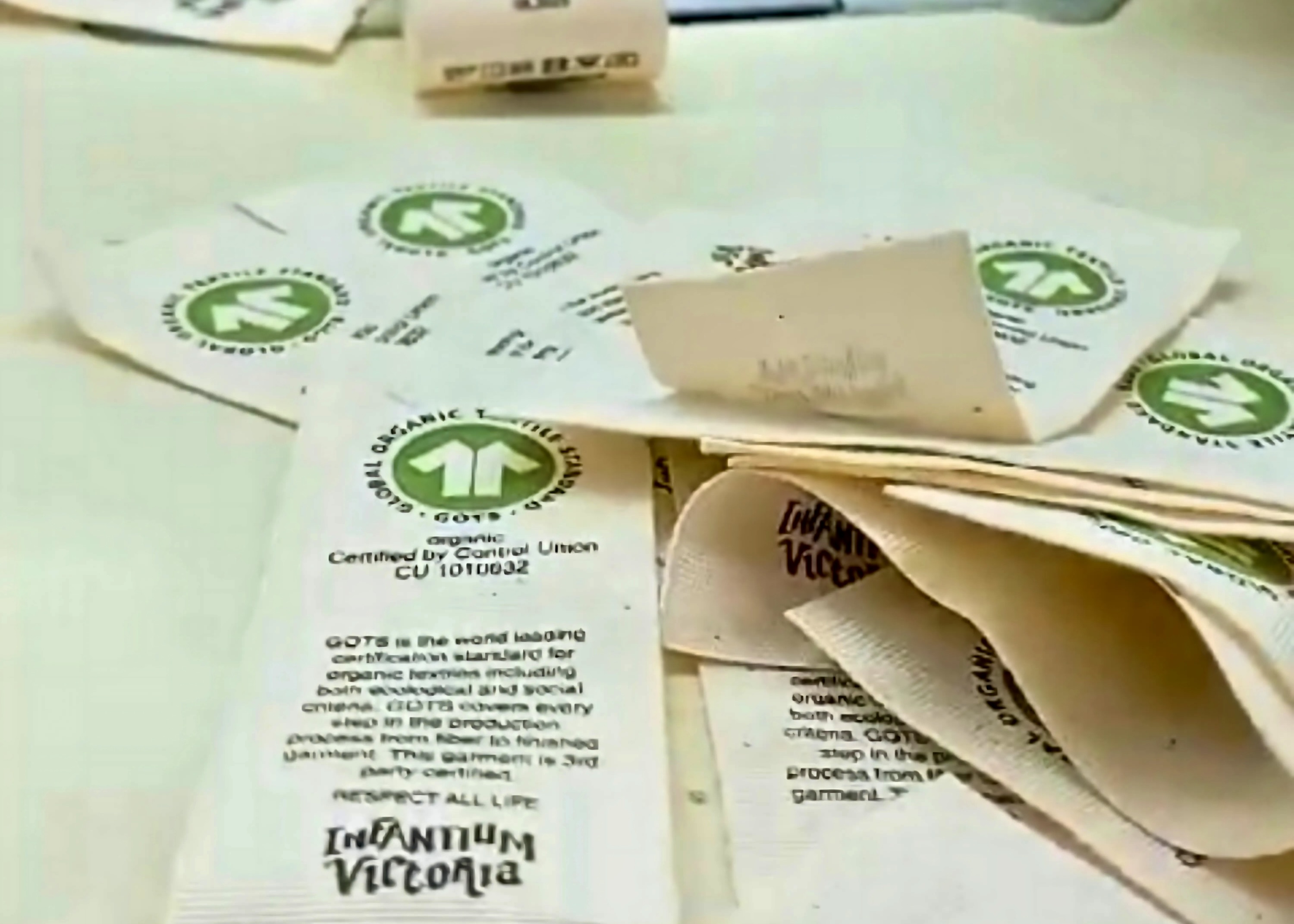
Another part of Infantium Victoria’s approach is GOTS certification, which the company obtained in 2019. For Infantium Victoria, working with certification has also involved looking closely at its internal processes and the information required from relevant suppliers.

The company reports that GOTS-labelled garments have also performed differently in its online store, with conversion rates for GOTS-tagged garments increasing by 12%.

“Placing the GOTS logo on our hang-tag gives parents an immediate indication that the garment has been certified to GOTS requirements,” explains Julia Gaydina, Co-Founder and CEO.

For Infantium Victoria, certification has also become part of how the team communicates about the processes behind its clothes.

The founders have taken that interest into education as well. As Infantium Victoria continues to develop its collections, certification remains one part of a broader story about materials, design and how children’s clothing is made.

For a brand creating clothes for the next generation, that also means helping families look beyond the finished garment and learn more about the fibres, people and processing stages involved in bringing it to life. And the best part? Infantium Vitcoria truly aims to educate even the youngest and have therefore released a book all about “The Journey of a GOTS T-Shirt”!

Why GOTS Matters: It Aims to Keep Pesticides & Heavy Metals Out of Tampons

A few months ago, Pesticide Action Network UK (PAN) and Women’s Environmental Network (WEN) released a shocking report ‘Blood, Sweat and Pesticides’. It revealed that 1 in 15 non-organic tampons sold on the UK high street contain glyphosate, a pesticide, at levels 40x higher than the legal limit for drinking water. Glyphosate, the chemical name for weed killer, has been linked to reproductive harm, hormone disruption, and cancer. For a product essential to hygiene, dignity, and everyday life, this revelation is deeply concerning. It calls for urgent industry accountability and transparency, two principles that Natracare have championed since 1989.

This is also where GOTS (Global Organic Textile Standard) has a vital role to play. GOTS certified tampons made from organic cotton are produced without toxic pesticides like glyphosate and are held to strict environmental, Human Rights- and social standards. People who menstruate deserve safe, clean period products. Choosing GOTS certified 100% organic tampons is a better choice for your health, the planet, and a fairer supply chain.

But What Is The Problem with Glyphosate in Period Products?

The words ‘glyphosate’ and ‘tampons’ ought never appear in the same sentence. Pesticide exposure is a global health concern, being linked to endocrine disruption and cancer. It’s presence in tampons is particularly alarming because period products are used on and around your body’s most sensitive skin. The vagina is highly absorbent, meaning chemicals can bypass the body’s metabolic filters and enter directly into the bloodstream. We believe that no one should have to worry about pesticide exposure from products that come into close contact with our bodies. This is especially true for tampons, which should always be safe, clean, and free from harmful chemical inputs.

The issue is not new. In 1989, Natracare founder Susie Hewson discovered the harmful effects poorly regulated period products had on both human health and the environment. Period products were bleached with chlorine, releasing carcinogenic by-products known as dioxins and furans into the water soil and air. Since then, testing has revealed toxic metals like lead and arsenic, PFAS, and now pesticides have all been discovered in conventional, non-organic tampons.

And it’s not only those who use these tampons that are affected by glyphosate exposure, the damage can be traced back to the beginning of the supply chain. Cotton is often referred to as “the world’s dirtiest crop” because of the high volumes of chemical inputs and pesticides used in its cultivation. These practices not only damage ecosystems but also put cotton farmers – many of them female – at serious risk of exposure, frequently without access to adequate protective equipment. While many mainstream tampons are made from conventionally grown cotton – often treated with pesticides like glyphosate – Natracare, as a GOTS-certfied company, has always sourced certified organic cotton, mitigating the use of toxic pesticides at any stage of production.

So, What Did the Report Find?

WEN sent 15 boxes of tampons bought from UK shops to an independent lab for pesticide residue testing. Despite the small sample size, the results were troubling:  glyphosate was found in tampons in one  of the boxes of the most popular and recognised tampon brands. The amount detected, 0.004mg/kg may not sound like much, but it’s 40 times higher than the legal limit for drinking water in the UK and EU (0.0001mg/kg).

And this was just one random box, from a small sample. Given how widely these products are sold, it is highly likely that tampons containing glyphosate are being used by those who menstruate across the globe. With no regulations outside of a few states in USA requiring period brands to disclose the ingredients in their products, nor a requirement to test for unintentionally added contaminants, consumers are left in the dark.  When it comes to your body, peace of mind is everything. That’s why choosing independent, trusted certifications like GOTS matters – so you know your tampon is made from 100% organic cotton, and nothing else.

Why GOTS Certification Is Crucial

GOTS is the global gold standard for organic textiles, and this includes tampons. The certification covers the entire supply chain, from the first processing stages of organic fibres right after harvest to weaving, manufacturing, and labelling.
By setting strict environmental, Human Rights and social criteria, GOTS ensures that no toxic pesticides like glyphosate are used, and that production respects both people and the planet. Because it’s an internationally recognised standard, manufacturers can export products with one organic certification accepted in all major markets – ensuring consistency and trust.

A Call for Industry Reform

No one should have to question whether their tampon contains toxic pesticides. The recent findings from PAN and WEN highlight a systematic problem in the menstrual product industry – a lack of regulation, transparency, and accountability.
The GOTS certification offers a clear solution: safe, organic & traceable products that protect your health and the environment. It’s time for the industry to step up, for regulators to take action, and for brands to commit to the highest standards.
GOTS sets the benchmark the entire industry should strive for. For decades, Natracare has proven that it’s not only possible to meet these standards but to exceed them — showing that tampons can be safe for your body while protecting the planet. Choosing GOTS-certified 100% organic cotton tampons isn’t just a lifestyle choice, it’s a health decision.

DIRTS by the Numbers – #BEHINDTHESEAMS

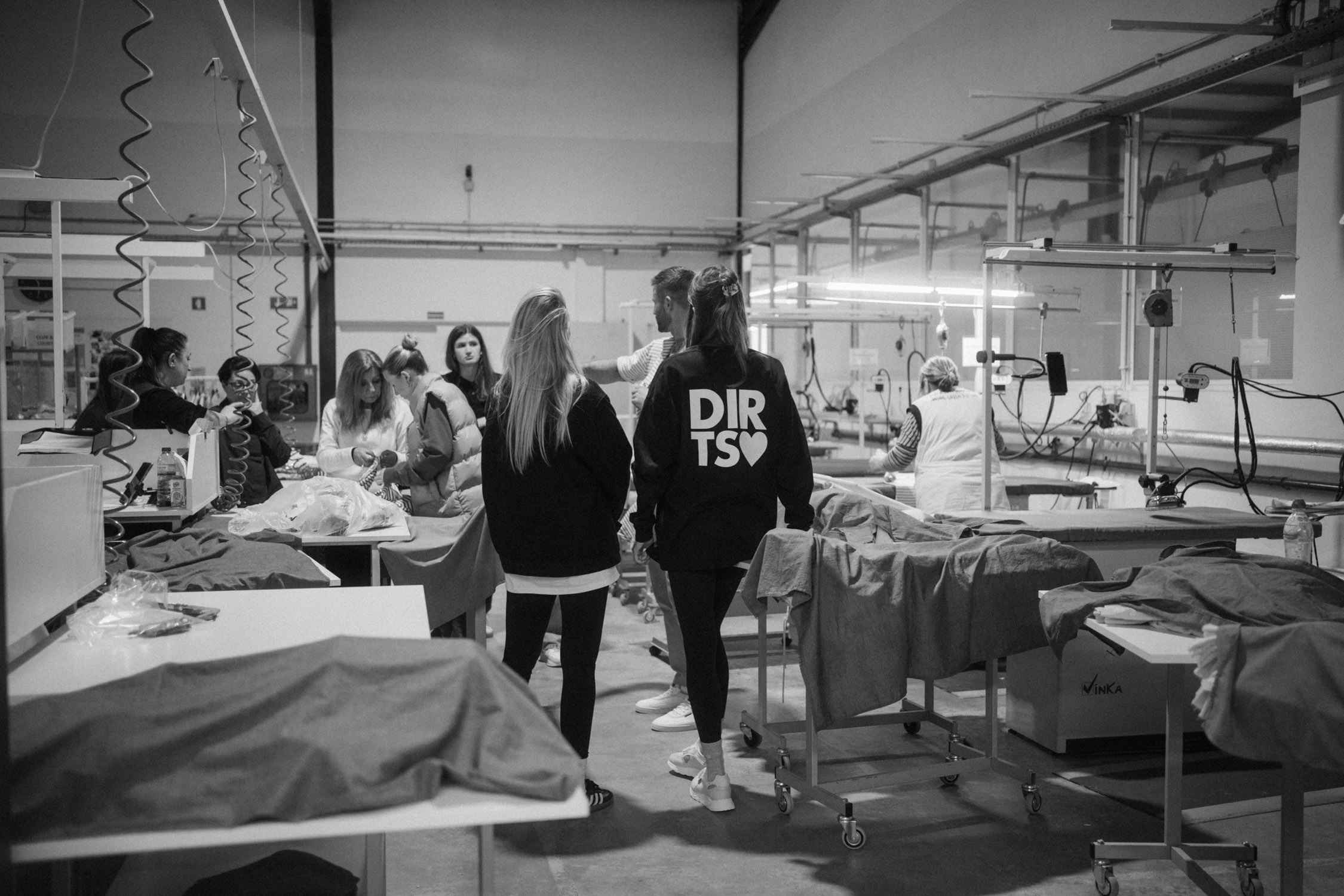
DIRTS, founded by Philipp in Aschaffenburg, Germany, DIRTS began as a passion project and has since developed into an established fashion label with a community of customers around the brand.

Eleven years later, the company remains small, with a team of ten people, while continuing to develop its approach to materials, production and certification. Philipp describes the ambition behind the brand simply: “We want to make the world of fashion a little better. Our focus is on slow fashion with clear values: honesty, transparency and social responsibility.” For DIRTS, putting those values into practice means looking closely at how its garments are made and working with defined certification requirements rather than relying on broad claims alone.

3,000 Pieces, 70% Certified

DIRTS produces around 3,000 garments each month, and the company reports that approximately 70% of its production is GOTS-certified. Manufacturing takes place in northern Portugal, where the spinning, dyeing and sewing facilities used for these products are located within relatively short distances of one another. “We want to understand our textile production in detail and work with a strong certification alongside our own processes. That’s why we chose GOTS,” Philipp explains.

7,000 km Saved – By Bicycle and Going Above and Beyond

DIRTS also looks at practical changes within its own operations.

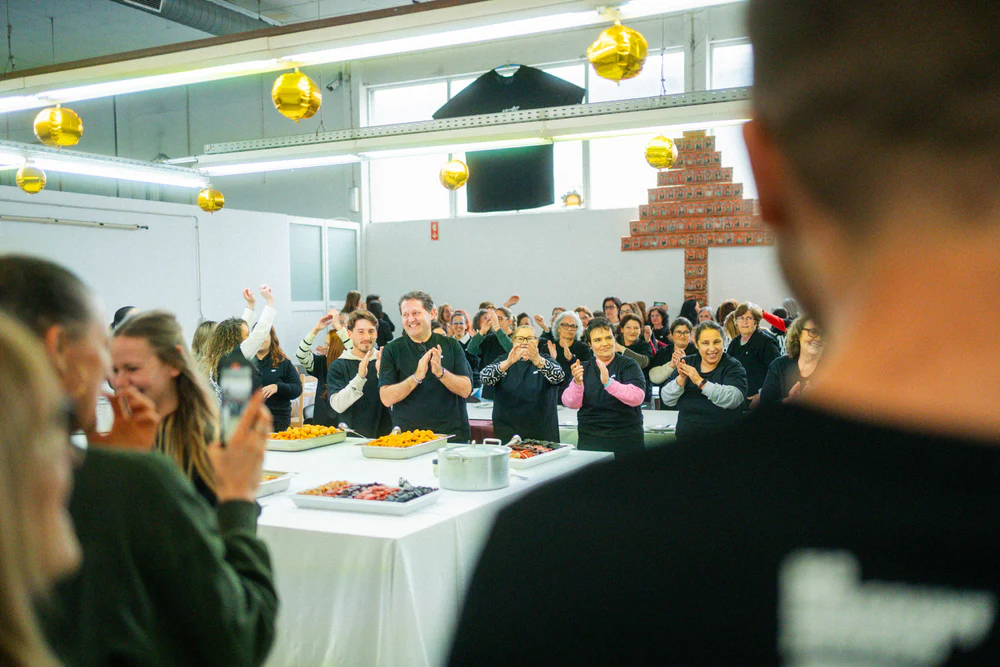
For local deliveries within a 25-kilometre radius, the company uses bicycles. DIRTS reports that approximately 7,000 delivery kilometres each year are completed by bicycle rather than motor vehicle. The team has also developed its own approach to Black Friday, choosing to organise a lunch with factory workers rather than running its usual discount promotion. Within its own team, DIRTS also talks openly about inclusion. One colleague with Down Syndrome has been part of the company for more than three years, reflecting the different people and experiences that make up the small team.

Since becoming GOTS-certified, DIRTS says the certification process has also encouraged the company to look more closely at information from its textile value chain and its internal processes. “It’s important to us that we don’t just scratch the surface, but examine the information behind what we communicate,” Philipp says. “For us, that is particularly important when we talk about environmental and social topics.”

The Future: Zero Waste

DIRTS is also thinking about the next stage of its development. One long-term ambition is to operate its own sewing facility and explore ways to reduce waste and keep materials and garments in use for longer.

Rather than treating that ambition as an achieved outcome, the company sees it as an area for continued development. For a team of ten, DIRTS has plenty it still wants to explore. GOTS certification remains one part of that story!

Redefining Strength: The Power of Soft Leadership in Fashion

Rethinking Leadership in Fashion

Traditional ideas of entrepreneurship often associate success with assertiveness and dominance. Miranda Chen, co-founder of LangerChen and Jiecco, offers a different perspective: patience, empathy and resilience can be equally important in building and leading a business.
For Miranda, this approach also shapes how she thinks about environmental and social considerations in textile production. Rather than treating them simply as marketing themes, she believes they need to be incorporated into everyday business decisions.

A Different Approach to Leadership

Miranda recalls attending a business seminar in China where she was the only woman in a room of men. The experience highlighted for her the continuing underrepresentation of women in some senior business environments.
Rather than adopting a more traditionally masculine leadership style, Miranda has focused on qualities such as patience, emotional intelligence and adaptability. She believes listening, collaboration and a long-term perspective can be powerful leadership tools.

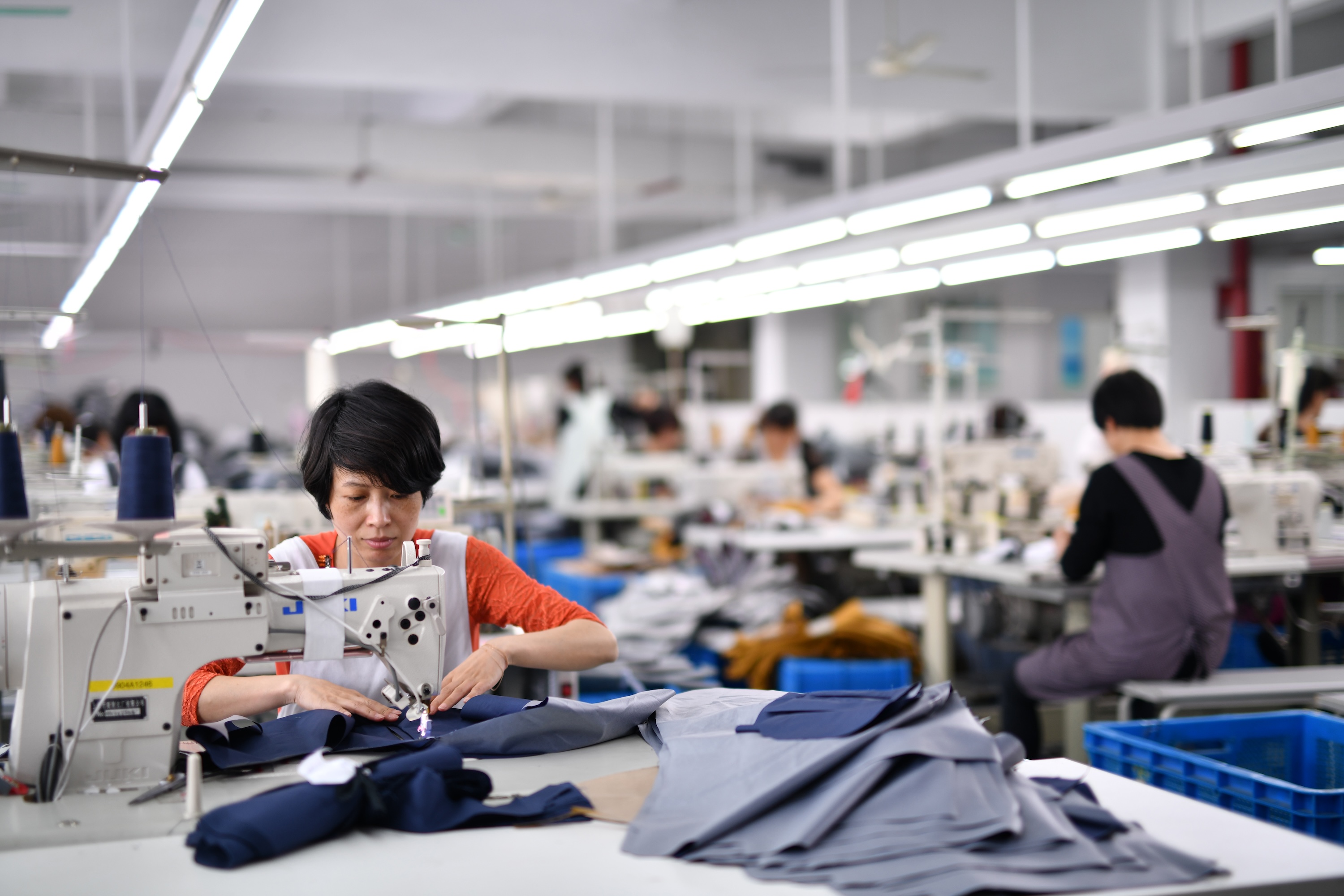
Her approach extends to the people involved in the business. From sewing staff to fabric suppliers, Miranda emphasises recognising each person’s contribution. She also points to practical measures, such as providing soft floor coverings for employees who spend long periods standing, as examples of how consideration for employees can become part of day-to-day management.

Her advice to young women entering textiles is similarly practical: think about environmental and social considerations from the beginning, build strong relationships with suppliers and manufacturers, and be patient. Meaningful change takes time.

At LangerChen and Jiecco, Miranda and her co-founder, Phillip Langer, have sought to incorporate environmental and social considerations into their approach to textile production.

GOTS provides a defined framework for textile processing and manufacturing. It covers stages after raw fibre production and includes requirements relating to certified organic fibre inputs, chemical inputs and processing, environmental management, and human-rights and social criteria. Compliance with applicable GOTS requirements is independently assessed and certified by accredited third-party Certification Bodies.

For Miranda, certification has provided structure and accountability:
“At first, I resisted certification. I thought, ‘I know I’m doing the right thing, why do I need proof?’ But over time, I realised that GOTS is not just about compliance—it’s about education, accountability and credibility. It helps businesses improve, step by step.” – Miranda Chen

For her, leadership and certification serve different but complementary purposes: leadership shapes the choices a business makes, while certification provides defined requirements and independent assessment.
“Sustainability isn’t about achieving perfection overnight. It’s about continuous progress. That’s what GOTS helps us do.” – Miranda Chen

Miranda’s experience shows that leadership does not have to be loud or dominant. Patience, empathy and collaboration can offer another way to lead—and another way to build a textile business around clearly defined values.


Water First, Organic Always: Looking at Fashion’s Footprint with Drip by Drip & Global Standard

The textile industry faces significant environmental challenges, including the use of water and other resources throughout production. Global Standard and Drip by Drip recently sat down to discuss how certification, water-focused projects and collaboration can help address some of these challenges.

Here’s what we learned about our common efforts to promote water conservation and organic textile production:

The Power of Partnership

When asked about the synergy between Global Standard and Drip by Drip, the response was clear: collaboration amplifies impact! Both of us recognize that our combined efforts can support sustainable practices and raise awareness on a global scale – and maybe even influence policies.
“Together, we can inspire brands to integrate comprehensive sustainability practices—from organic certifications to water conservation programs—especially in regions where they are most needed,” Yared from Drip by Drip notes.

Two Sides of the Same Coin: Water and Organic Textiles

Global Standard and Drip by Drip bring together different areas of expertise. While Global Standard develops and maintains GOTS, Drip by Drip focuses on water-related projects in textile-producing regions.
“Together, we can inspire brands to integrate comprehensive sustainability practices—from organic certifications to water conservation programs—especially in regions where they are most needed,” Yared from Drip by Drip notes.

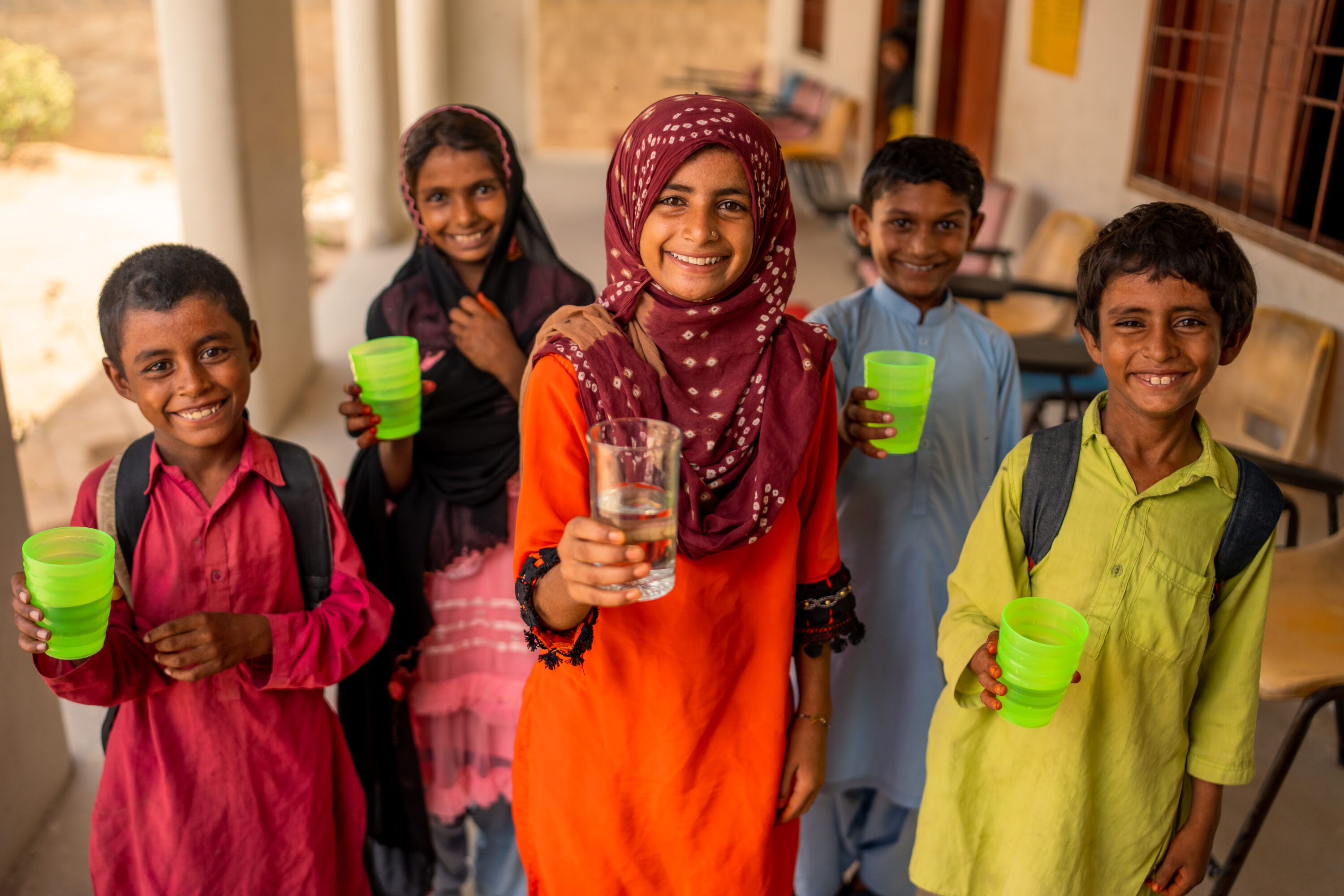
Let’s have a look at an actual project of Drip by Drip: In partnership with the Hisaar Foundation, Drip by Drip is making significant strides in providing safe drinking water and sustainable solutions to communities in Pakistan affected by the textile industry’s environmental impact. Through its Water, Sanitation, and Hygiene (WASH) initiative, the project focuses on schools in Gudap Town, located on the outskirts of Karachi in the Malir District, creating meaningful change for local families and students.

Water management is relevant at different stages of textile production. GOTS sets defined environmental criteria for certified textile processing, including requirements relating to chemical inputs, wastewater treatment and environmental management.
GOTS covers textile processing stages after raw fibre production; it does not certify organic farming or cotton cultivation. Compliance with applicable GOTS requirements is independently assessed and certified by accredited third-party Certification Bodies.

Drip by Drip complements this with projects focused on water access, sanitation and water management.

One example is its work with the Hisaar Foundation in Pakistan. Through its Water, Sanitation and Hygiene (WASH) initiative, the project works with schools in Gudap Town on the outskirts of Karachi.

Activities include providing water filtration and sanitation infrastructure, establishing kitchen gardens, and offering WASH clubs and training on water conservation and hygiene.

According to Drip by Drip, the project currently reaches 189 students, 21 teachers and staff, and 100 local families—approximately 700 people. Six WASH facilities have been implemented, with further facilities planned.

Exploring New Approaches

Across the textile sector, approaches such as closed-loop water systems, alternative dyeing processes and improved wastewater treatment are being explored.
For GOTS-certified operations, defined environmental and chemical requirements apply to the textile processing stages covered by the standard. Drip by Drip, meanwhile, focuses on practical water-related initiatives for communities.

Together, these perspectives show how different organisations can address different parts of a complex textile production system.

Challenges and Opportunities
Changing established practices requires collaboration across producers, manufacturers, brands and policymakers.
“By uniting farmers, manufacturers, policymakers, and brands around shared commitments to sustainable practices, we can foster meaningful change,” Yared explains.

Clear information is equally important, helping consumers understand how products are made and what particular standards and initiatives actually cover. Drip by Drip’s mantra, “Water First. Fashion Second.”, reflects its focus on water. For Global Standard, clear requirements and independent certification provide a structured framework for assessing covered textile-processing operations.

“We Are All in This Together!”
Our exchange with Drip by Drip shows the value of bringing together different areas of expertise. Water projects, textile-processing requirements, independent certification and education each address different aspects of the challenges facing the textile sector.
For consumers, specific and transparent information can help make the initiatives behind textile products easier to understand.

Because #behindtheseams, there’s always more to discover.