Meet PILATEX: “Luxury textiles begin with respect for the people who make them.”

In the highlands of Madagascar, generations of textile knowledge continue through skilled hands and carefully practised techniques. Today, that tradition is part of the story of GOTS-certified textile manufacturer PILATEX.

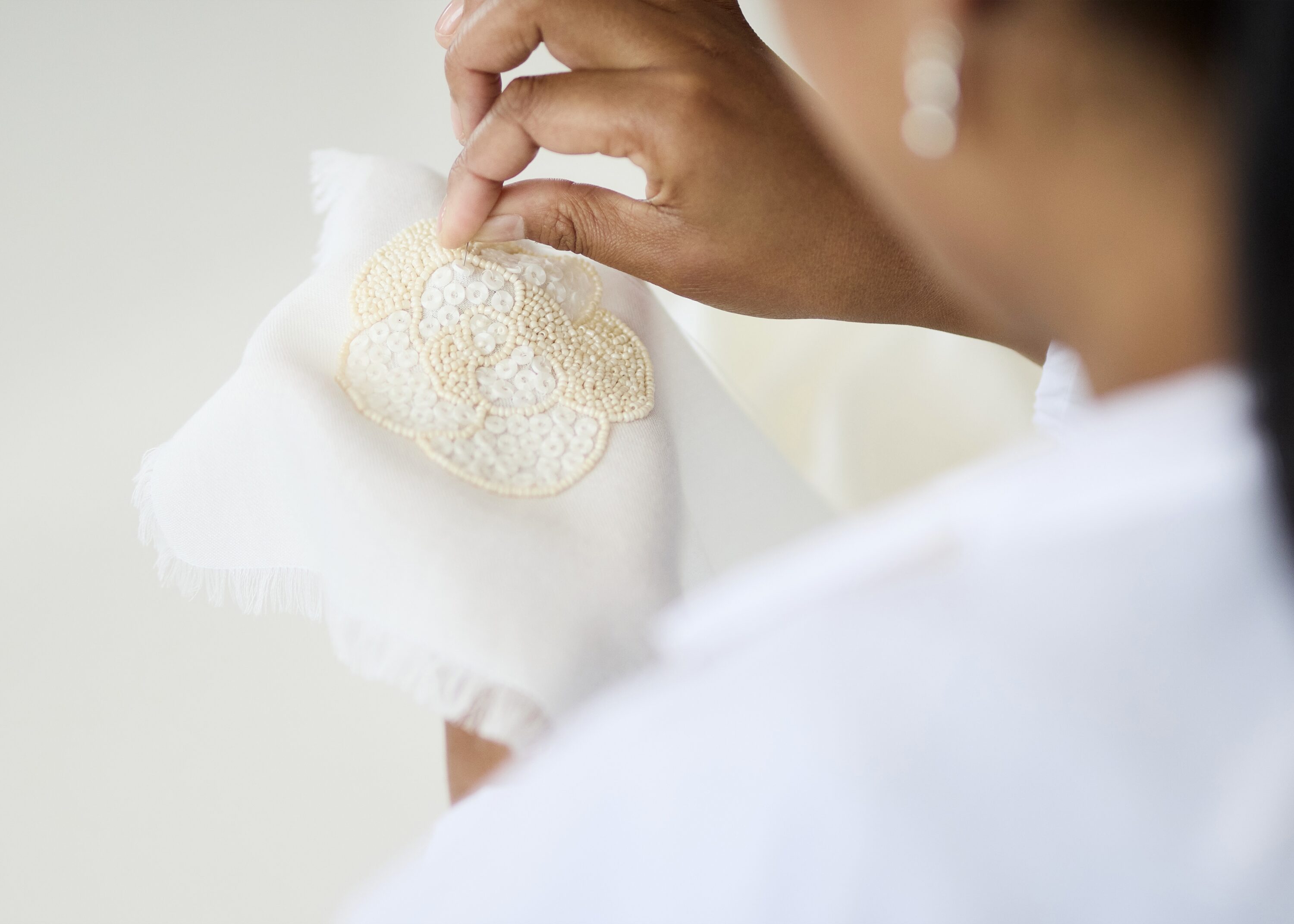
Behind products made for international fashion, home décor and tableware brands stands a company many consumers may not yet know. Within its workshops, more than 700 artisans — around 80% of them women — produce millions of textile accessories each year, combining Malagasy craftsmanship with modern textile production.
Founded in 1992 PILATEX has built its business around local production and artisanal skills.

Madagascar’s textile tradition is rooted in meticulous manual work and dexterity. At PILATEX, those skills remain part of everyday production, including in the creation of scarves, pouches, shawls and other textile accessories.
The company combines hand-executed techniques with specialised machinery to produce for international brands while maintaining a strong focus on craftsmanship.
PILATEX describes its philosophy this way:
“Choosing to produce locally is not merely an industrial decision: it reflects our conviction that textile production is built over time, by enhancing artisanal skills and creating economic and social value rooted in local communities.”
When Work Creates Opportunity

PILATEX places particular emphasis on employment and social programmes for its workforce and their families.
One of the company’s stated core values is:
“EMANCIPATION & EMPOWERMENT, our foundation. We strive to transform lives through dignified work and access to basic social services. Our craftswomen become the pride of their families, build economic independence, and open new horizons for future generations.”
PILATEX reports that its healthcare programmes support approximately 3,000 people, including coverage of 80% of hospitalisation costs. The company also reports supporting educational opportunities for around 650 children and young people each year through scholarships, academic support and post-secondary guidance.
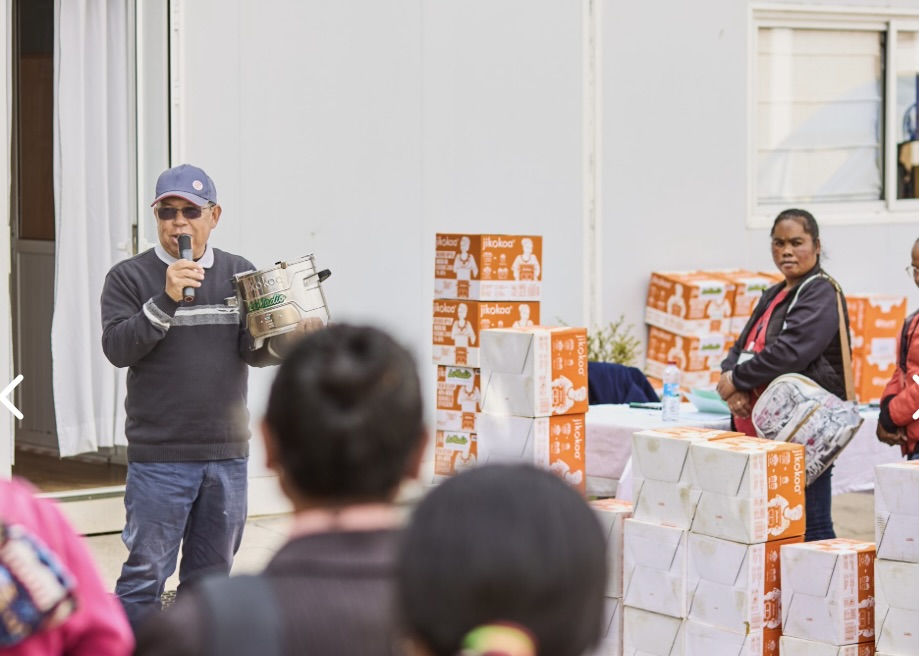
The company’s programmes also extend beyond the workplace. According to PILATEX, hundreds of families have received improved cooking stoves and other cooking solutions.

Within its operations, the company has introduced solar power, recycling initiatives, river-water recovery systems and carbon-footprint analysis. It also reports planting local species through community-based reforestation activities and providing employees and their families with information about environmental practices.
PILATEX subsequently pursued certification under the Global Organic Textile Standard (GOTS).

GOTS sets requirements for the processing and manufacturing of textiles made with certified organic fibres. Its scope covers stages after raw fibre production, including first processing, manufacturing and trading.
PILATEX says that implementing GOTS requirements strengthened a number of its existing systems and introduced additional mechanisms, including accessible reporting channels and suggestion boxes for artisans.
The company also reports commercial and organisational effects following certification, including stronger relationships with international clients, new business opportunities and changes to internal processes.
PILATEX describes another effect in its own words:
“Beyond technical and commercial aspects, GOTS has had an unexpected cultural effect within our company: a renewed sense of pride.”
For PILATEX, GOTS certification also provides a way to demonstrate to customers that activities within the scope of certification have been independently assessed against applicable requirements of the standard.
The company explains:
“Working in an organisation audited against a globally recognised standard provides concrete proof that the gestures of everyday work — handling of inputs, hygiene, working conditions — meet international expectations.”
At PILATEX, traditional Malagasy textile skills now operate alongside production systems serving international customers. Its story shows how artisanal knowledge, local employment initiatives and independently certified textile processing can come together within a modern manufacturing business.
A Valentine’s Day #BehindTheSeams: Meaningful Gifts for Lovers of Certfied Products

Valentine’s Day has become one of those moments in the year when consumption can easily distract from what matters when showing care and affection to the people closest to us. When shops fill with thousands of heart-shaped objects and gift guides tell us which trending items we “must” have this year, the pressure to express love through spending can sometimes feel louder than the sentiment itself.

But love doesn’t need excess.

Valentine’s Day can instead be an opportunity to think carefully about what – if anything – we choose to give. Because the most meaningful gifts are rarely the loudest ones. They are the thoughtful ones.
Love is not fast – and a gift doesn’t have to be either
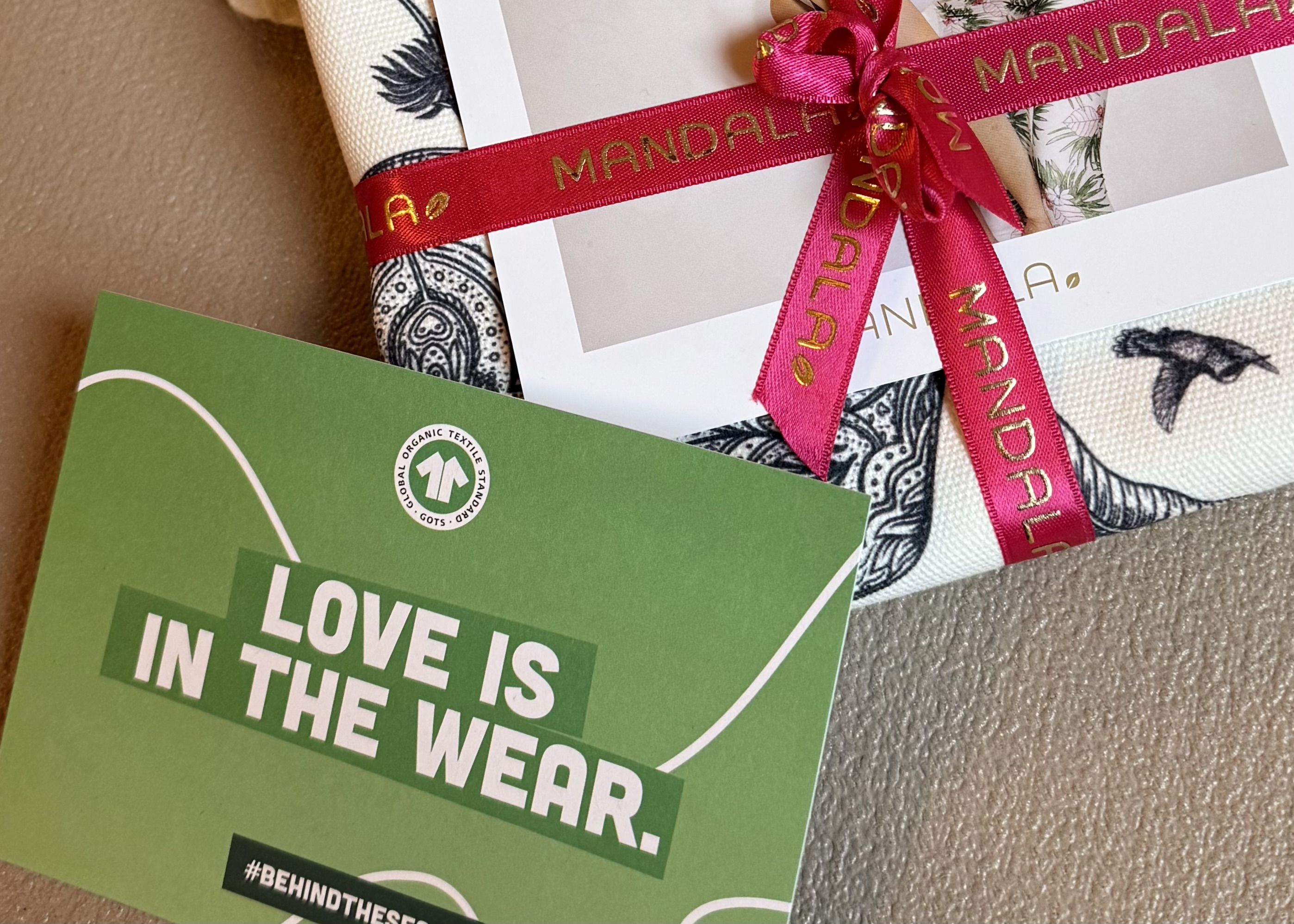
Clothing and other textiles can be chosen for more than a passing trend. If you decide to give a textile-related gift this Valentine’s Day, it doesn’t have to be extravagant. It could simply be one carefully selected piece that suits the person receiving it and that they will want to wear or use again and again.

For consumers looking for information about how a textile has been produced, certification can provide a defined reference point. GOTS sets requirements for the processing and manufacturing of textiles made with certified organic fibres, including requirements relating to chemical inputs, environmental management and defined social criteria. Compliance with applicable GOTS requirements is independently assessed and certified by accredited third-party Certification Bodies.

So a Valentine’s gift might be a GOTS-certified shirt containing the specified proportion of certified organic fibres, or a scarf chosen because you know the person receiving it will enjoy wearing it.
Not because any product is “perfect,” but because a thoughtful gift can reflect the care that went into choosing it.

The most romantic gift is attention, right?

For many people the most meaningful gifts aren’t objects at all. They are gestures. Time spent together without distraction. A healthy meal cooked slowly (maybe even together). A walk, a shared afternoon, a moment that feels genuine rather than staged.

Valentine’s Day doesn’t need to be an industry-driven performance. It can simply be an excuse to pause and say:  I know what matters to you. I want to build that kind of life with you.

That is romance without consumerism.

Thoughtful gifts can still be beautiful

Of course, giving something tangible will always be special if chosen with intention.

Jewelry made from recycled metals. Fair trade chocolate that supports farmers instead of harming them. Small accessories, like scrunchies or socks made from certified fabrics, crafted with transparent supply chains. These gifts carry meaning because they reflect care not only for your partner, but also for the people behind the product. A good gift is not about being trendy, but about being mindful.

A Valentine’s Day aligned with certified textiles, gifts and conscious living isn’t about perfection. It isn’t about expensive things or grand gestures. It’s about refusing mindless consumption and choosing something more lasting: connection, respect and shared intention. Love is measured in how deeply you care.

Rest, Reconsidered: The Materials That Hold Us While We Sleep

Sleep is not something that happens only in the body. The way we rest and give our body energy is shaped by space, light, texture, colour, temperature and by the subtle signals our environment sends to the nervous system long before we close our eyes. This understanding lies at the heart of Kalani Home, a Belgian home textile brand founded in 2016 in Genval (Belgium), whose work sits right where design, well-being and material consciousness. Specialising in bed linen, bath and table linen, as well as light bedding such as duvets and pillows, Kalani approaches the concept of “home” not as a purely aesthetic space, but as a living environment that can actively support rest, recovery and emotional balance with textiles.

From the beginning, Kalani has worked with a small, focused team and a deliberately controlled production scale, designing textiles with longevity in mind. Its collections are understated and timeless, allowing the body and the space to take centre stage.

GOTS has formed part of Kalani’s approach since the brand’s early years. Founder Bruno Van Steenberghe says that, after researching different approaches to textile production, the company decided to work with textiles made with certified organic fibres and processed and manufactured in accordance with GOTS requirements. GOTS applies requirements to the processing and manufacturing of textiles made with certified organic fibres, including defined environmental and social requirements.

Neuro-architecture explores the relationship between people and the spaces around them, including how elements such as layout, bed placement, colours, textures and materials contribute to the experience of a room. A bedroom can be visually expressive or deliberately simple, but in either case its design can influence how we experience the space.

Within this approach, home textiles are an important part of bedroom design. Sheets, pillowcases and duvet covers are not simply decorative layers: they are in direct contact with the body for several hours each night. Their texture, weight, warmth and feel can therefore play an important role in personal comfort and in the overall sensory character of the bedroom.

Material choice is part of that experience. Cotton and linen, for example, have distinctive material properties and textures that can be considered alongside factors such as colour, weight, weave and the temperature of the room. Rather than treating bedding simply as decoration, a neuro-architectural approach considers it as one element within the wider design of the sleeping environment.

Kalani has explored these ideas through collaborations with sleep and home-design experts, examining how choices in home textiles interact with spatial design. More recently, the brand has been working with neuro-architecture and feng shui expert Alexandra Bautista, founder of Architecture Vivante®, whose approach brings together neuroscience, environmental psychology and spatial planning.

In this approach, the bedroom is considered a space for rest and recovery, with attention given to how its different elements work together. Material, texture, colour and spatial arrangement can all form part of creating a bedroom that feels comfortable and restful to the person using it.

Colour is another important part of how we experience a bedroom. Bedding is often chosen according to personal taste or changing trends, but colour can also contribute to the overall atmosphere of a space. Some people find soft blues and muted tones restful, while others feel more comfortable surrounded by warmer or deeper colours. Because bedding occupies such a prominent place in the bedroom, its colour and pattern can have a strong visual presence.

Neuro-architecture does not need to translate this into a universal formula. There is no single “correct” colour or texture for everyone. Personal history, associations and individual preferences can all affect how we experience a space. A colour one person finds soothing may be unappealing to another.

This makes observation a useful part of bedroom design. Notice how different colours, fabrics and textures feel to you when you enter the room or get into bed. Rather than following a fixed formula, these preferences can help shape a sleeping environment that feels comfortable and personal.

Bedding can therefore become part of a personal ritual rather than simply a static object. Changing the sheets is a practical task, but it can also refresh the colour, texture and overall atmosphere of the room in which we rest.

Kalani Home approaches its textile choices with this relationship between material and space in mind. Its bedding uses natural fibres and places emphasis on tactile qualities, colour and materials intended for regular, everyday use. For its GOTS-certified products, the relevant certification provides a defined framework for textile processing and manufacturing, including requirements relating to chemical inputs and residue limits.

In a world full of screens, stimulation and busy routines, neuro-architecture invites us to pay closer attention to the spaces in which we rest. The home, and especially the bedroom, can be approached as a place where colour, texture, materials and layout come together to create a particular atmosphere. Through thoughtful design and greater awareness of how we personally experience our surroundings, the bedroom can become a space that feels comfortable, restorative and distinctly our own.

Sometimes, creating a bedroom that feels right is not about adding more, but about paying closer attention to what we choose to surround ourselves with when it is time to rest.

Rethinking Dyeing and Wet-Processing with SALZWASSER – The role of GOTS certification

Dyeing is an important stage of textile processing. It brings colour to fabrics and helps turn materials into the textiles and clothing we use every day. It is also a stage where choices about chemical inputs, water and wastewater management become particularly relevant.

For SALZWASSER, a German brand with GOTS-certified products, these processing stages are an important part of the conversation about how textiles are made.

“We wanted a certification that covers every step and not just the raw material. That’s why we chose the GOTS label,” says founder Lennart Henze.

More precisely, GOTS applies requirements across textile processing after raw fibre production, including first processing, manufacturing and trading. Wet processing, including dyeing, is one of those areas. GOTS sets criteria for chemical inputs used in textile processing as well as requirements relating to wastewater management. These requirements provide defined criteria against which certified operations can be assessed rather than treating dyeing simply as an unseen step between fibre and finished garment.

SALZWASSER also has its GOTS-certified textiles tested by the Bremer Umweltinstitut for specified substances, including formaldehyde and certain heavy metals. Such testing can provide information about the substances covered by the particular analysis. It should not, however, be understood as establishing that a finished textile is entirely free from harmful substances or is harmless under all circumstances.

For Henze, focusing on dyeing and other processing stages is an important part of SALZWASSER’s approach to its products. “The environmental impact of dyeing is enormous,” he explains.

GOTS certification provides a framework of defined requirements that applies to these processing stages. Rather than making a broad claim that a product or dyeing process is simply “sustainable” or environmentally harmless, certification allows brands and consumers to identify the requirements against which processing within the certification scope has been independently assessed.

For customers, that means looking beyond the fibre itself and considering the processing stages that turn fibre into fabric and fabric into a finished textile.

For SALZWASSER, colour is therefore not only about the finished look. Dyeing is also a processing stage where defined requirements for chemical inputs and wastewater management can be applied and independently assessed through GOTS certification.

Would you like to have a further look into SALZWASSER’s dying facilty? Click here!

Why GOTS Matters: It Aims to Keep Pesticides & Heavy Metals Out of Tampons

A few months ago, Pesticide Action Network UK (PAN) and Women’s Environmental Network (WEN) released a shocking report ‘Blood, Sweat and Pesticides’. It revealed that 1 in 15 non-organic tampons sold on the UK high street contain glyphosate, a pesticide, at levels 40x higher than the legal limit for drinking water. Glyphosate, the chemical name for weed killer, has been linked to reproductive harm, hormone disruption, and cancer. For a product essential to hygiene, dignity, and everyday life, this revelation is deeply concerning. It calls for urgent industry accountability and transparency, two principles that Natracare have championed since 1989.

This is also where GOTS (Global Organic Textile Standard) has a vital role to play. GOTS certified tampons made from organic cotton are produced without toxic pesticides like glyphosate and are held to strict environmental, Human Rights- and social standards. People who menstruate deserve safe, clean period products. Choosing GOTS certified 100% organic tampons is a better choice for your health, the planet, and a fairer supply chain.

But What Is The Problem with Glyphosate in Period Products?

The words ‘glyphosate’ and ‘tampons’ ought never appear in the same sentence. Pesticide exposure is a global health concern, being linked to endocrine disruption and cancer. It’s presence in tampons is particularly alarming because period products are used on and around your body’s most sensitive skin. The vagina is highly absorbent, meaning chemicals can bypass the body’s metabolic filters and enter directly into the bloodstream. We believe that no one should have to worry about pesticide exposure from products that come into close contact with our bodies. This is especially true for tampons, which should always be safe, clean, and free from harmful chemical inputs.

The issue is not new. In 1989, Natracare founder Susie Hewson discovered the harmful effects poorly regulated period products had on both human health and the environment. Period products were bleached with chlorine, releasing carcinogenic by-products known as dioxins and furans into the water soil and air. Since then, testing has revealed toxic metals like lead and arsenic, PFAS, and now pesticides have all been discovered in conventional, non-organic tampons.

And it’s not only those who use these tampons that are affected by glyphosate exposure, the damage can be traced back to the beginning of the supply chain. Cotton is often referred to as “the world’s dirtiest crop” because of the high volumes of chemical inputs and pesticides used in its cultivation. These practices not only damage ecosystems but also put cotton farmers – many of them female – at serious risk of exposure, frequently without access to adequate protective equipment. While many mainstream tampons are made from conventionally grown cotton – often treated with pesticides like glyphosate – Natracare, as a GOTS-certfied company, has always sourced certified organic cotton, mitigating the use of toxic pesticides at any stage of production.

So, What Did the Report Find?

WEN sent 15 boxes of tampons bought from UK shops to an independent lab for pesticide residue testing. Despite the small sample size, the results were troubling:  glyphosate was found in tampons in one  of the boxes of the most popular and recognised tampon brands. The amount detected, 0.004mg/kg may not sound like much, but it’s 40 times higher than the legal limit for drinking water in the UK and EU (0.0001mg/kg).

And this was just one random box, from a small sample. Given how widely these products are sold, it is highly likely that tampons containing glyphosate are being used by those who menstruate across the globe. With no regulations outside of a few states in USA requiring period brands to disclose the ingredients in their products, nor a requirement to test for unintentionally added contaminants, consumers are left in the dark.  When it comes to your body, peace of mind is everything. That’s why choosing independent, trusted certifications like GOTS matters – so you know your tampon is made from 100% organic cotton, and nothing else.

Why GOTS Certification Is Crucial

GOTS is the global gold standard for organic textiles, and this includes tampons. The certification covers the entire supply chain, from the first processing stages of organic fibres right after harvest to weaving, manufacturing, and labelling.
By setting strict environmental, Human Rights and social criteria, GOTS ensures that no toxic pesticides like glyphosate are used, and that production respects both people and the planet. Because it’s an internationally recognised standard, manufacturers can export products with one organic certification accepted in all major markets – ensuring consistency and trust.

A Call for Industry Reform

No one should have to question whether their tampon contains toxic pesticides. The recent findings from PAN and WEN highlight a systematic problem in the menstrual product industry – a lack of regulation, transparency, and accountability.
The GOTS certification offers a clear solution: safe, organic & traceable products that protect your health and the environment. It’s time for the industry to step up, for regulators to take action, and for brands to commit to the highest standards.
GOTS sets the benchmark the entire industry should strive for. For decades, Natracare has proven that it’s not only possible to meet these standards but to exceed them — showing that tampons can be safe for your body while protecting the planet. Choosing GOTS-certified 100% organic cotton tampons isn’t just a lifestyle choice, it’s a health decision.

Exploring Lyocell with LangerChen

Did you know that GOTS allows certain additional fibres to be used alongside certified organic fibres in textile products, subject to applicable GOTS requirements?

GOTS has two label grades. The “organic” label grade requires at least 95% certified organic fibres, while the “made with organic” label grade requires at least 70% certified organic fibres.

It is important to distinguish the organic certification of raw fibres from GOTS certification of textile processing and manufacturing. GOTS does not certify the cultivation of organic fibres. Instead, GOTS applies to subsequent stages of the textile production process, after raw fibre production, including first processing, manufacturing and trading. Depending on the applicable GOTS composition requirements, additional fibres can make up part of a GOTS-certified textile product. One fibre that can be used as an additional fibre is lyocell.

But do you know where lyocell comes from, how it is produced and what gives textiles made with it their flowing and soft qualities?
Philipp Langer, one of the co-founders of the German coat and jacket brand LangerChen, sat down with us to talk about textiles made with lyocell and how the fibre is used in the brand’s products:

ABOUT LYOCELL WITH LANGERCHEN

Tiny footprints, big impact: 6 tips for raising kids with certified textiles in mind

At Frugi, a UK-based baby, children’s and mum’s clothing brand, we’ve got a fair few parents on the team who know the juggle all too well. From recycling and passing on clothes to growing food at home, here are some of the everyday activities they enjoy with their families:

  • Rowan, Graphic Designer: “At home, we try to make activities like recycling and composting a bit of fun for the kids. We get them involved in little tasks, and they actually love it! We turn it into a game to see who can sort everything into the right bins the fastest.”
  • Jeni, Product & Brand Director: “We’re all about hand-me-downs in our family. Some of our Frugi clothes have easily gone through my two (now teenage) nephews, my own two children, and have now been passed to friends with smaller children too. Passing clothes on means they can be used for longer, brings some variety to the kids’ wardrobes, and can save money at the same time.”
  • Meg, Marketing Manager: “Getting my little one involved in what we do has really helped them be part of the choices we make. We’ve started growing some easy veggies in the garden, and it’s been so much fun teaching them how to take care of the plants. The best part is using what we’ve grown in our cooking!”

Inspired by our team, here are some simple activities you can try with your kids:

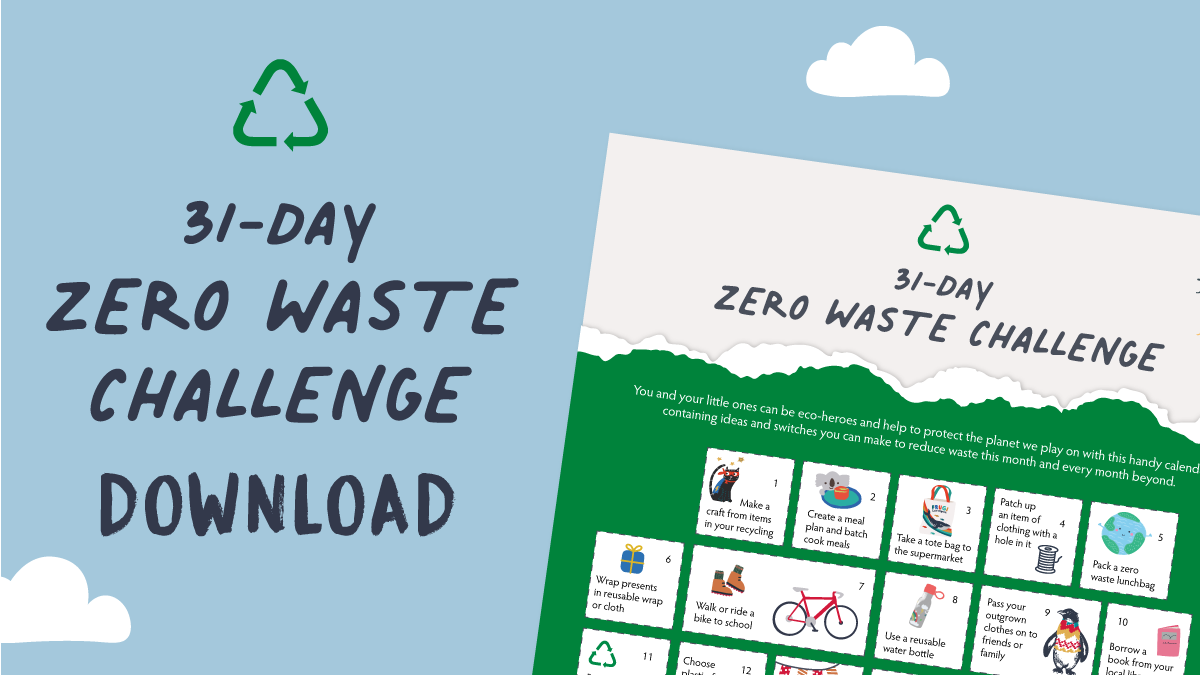
  1. Start a Recycling Challenge: Make recycling fun by creating a challenge for your kids. See who can sort recyclables the fastest, or come up with creative ways to reuse items. Use this handy poster as a reminder of ways you can be a hero every day by reducing, reusing and recycling. Download here.
  2. Create a Capsule Wardrobe: Invest in a few high-quality, versatile clothing pieces instead of a huge quantity of items. Go for designs that are easy to mix and match to create multiple outfits, which is even easier with Frugi’s reversible clothing. This approach not only simplifies daily routines but also helps instil a sense of mindfulness for the planet in your children from an early age.
  3. Gardening Together: Plant a small garden or even a few pots of herbs on the windowsill. It’s a great way for kids to connect with nature and learn about where their food comes from. Print out our garden markers download to label your fruit, veggies and herbs.
  4. Go on a Nature Adventure: Spend a day exploring your local park, forest or beach. Pack a picnic, take a nature walk and encourage your kids to observe the beauty around them. We have a handy eye spy bingo you can take with you.
  5. Look after Our Wild Friends: Teach your little ones the importance of being kind to the animals and creatures we live amongst. Help to create safe spaces for the little creatures that roam our planet by building a bug hotel in your garden or outdoor space and practice identifying little creatures.
  6. Say Yes! to Zero Waste: Be a hero every day by encouraging children to reduce waste. We’ve even got a handy 31-day zero waste challenge that’s filled with simple ideas and switches you can make as a family to help reduce the impact of waste on the planet.

At the end of the day, there are lots of everyday choices families can make together. From passing clothes on so they can be used for longer to recycling, growing vegetables and spending time in nature, small activities can also be a great way to get children involved.
When choosing textiles, certification can provide additional information about how a product has been made. For GOTS-certified products, textile processing and manufacturing operations are independently assessed against specified GOTS requirements.

So, let’s keep involving our children in the choices we make and the things we do together. Because really, kids don’t always need more clothes. Sometimes what they need most is more time outdoors, more joy, more fun and a bright, bright future ahead of them.

Meg Brown, Marketing Manager at Frugi, leads campaigns and partnerships for the brand.